Second Temple Burial Practices in Israel
In the first century (Second Temple period), Jewish burial in Eretz Yisrael, especially around Yerushalayim, generally followed a two-stage process, as reflected in the Talmud and Mishna and strongly confirmed by archaeology.
Stage 1: Primary Burial (Kevurat Ar’ii)
The body was prepared with washing and shrouds (tachrichim), placed in a family rock-hewn tomb soon after death (often the same day, per halachah like in Moed Katan).
The tomb featured kokhim (narrow niches cut into the walls) where the body lay on a bench or shelf to decompose naturally.
Stage 2: Secondary Burial (Lekitat Atzamot or Asifat Atzamot)
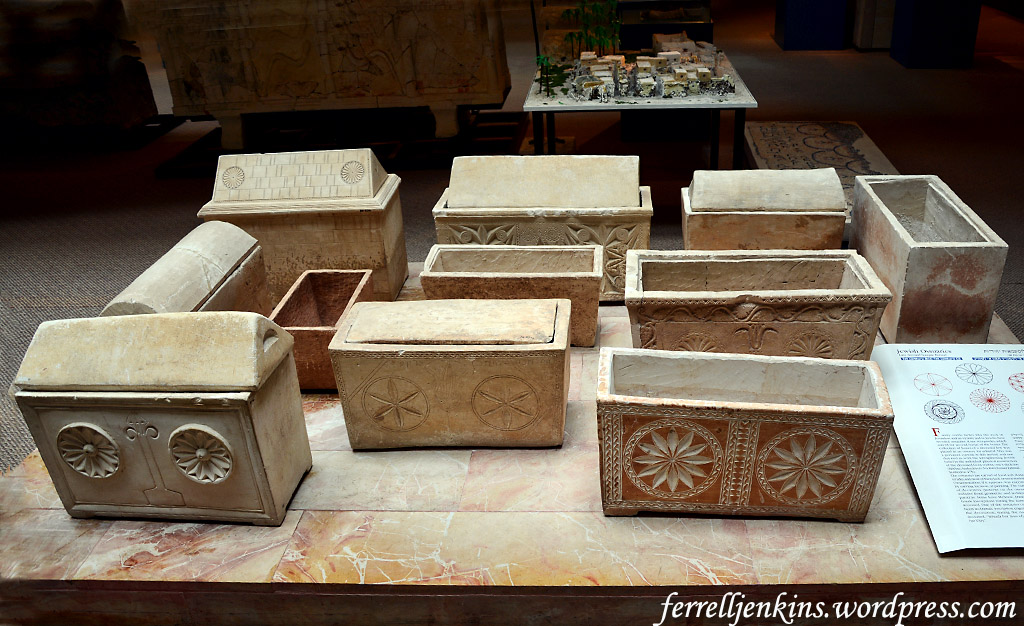
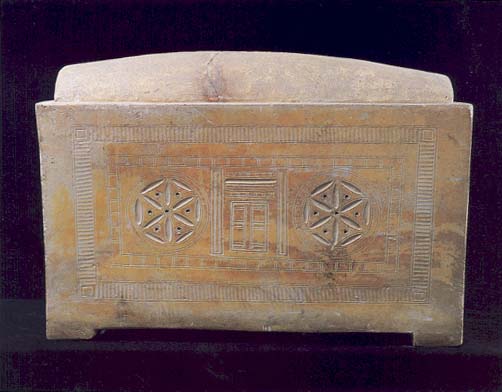
After about a year, when the flesh decomposed, the bones were collected and placed in a limestone chest called an ossuary (gluskama in Aramaic).
This honored the deceased, cleared space in the family tomb, and aligned with beliefs in bodily resurrection (as bones were seen as the core that Hashem would revive).
Key Sources from Mishna and Gemara
A clear reference appears in the Mishnah, discussing executed criminals (but reflecting broader custom):
Mishnah Sanhedrin 6:5–6
לא היו קוברין אותו בקברות אבותיו… וכשנתפשט הבשר מלקטין את העצמות וקוברין אותן במקומן. ומשם ואילך באין בניו ובני ביתו ושלום עליכם אחיי על הרוגים ועל הנסקלין…
“They did not bury him in the graves of his ancestors… And when the flesh had decomposed, they gathered the bones and buried them in their proper place. From that point onward, his relatives would come and greet [the judges and witnesses] in peace…”
This shows secondary burial, gathering bones into an ossuary, as standard practice. Once complete, full mourning and family reintegration resumed.
The minor tractate Semachot (Evel Rabbati), part of the oral Torah and reflecting Mishna era practices, discusses this directly:
Mishnah Semachot 12
ליקוט עצמות – מצווה גדולה היא… המלקט עצמות אביו ואמו – שמחה היא לו, שנאמר “ומשמח לבב אנוש”.
“Gathering bones is a great mitzvah… One who gathers the bones of his father or mother—it is a source of joy for him…”
The rabbis viewed this as joyous (not mournful), fulfilling respect for parents and the deceased, with the soul finding greater rest.
Other Gemara discussions (e.g., Moed Katan 8a–b on mourning interruptions, or Sanhedrin 47a–b elaborating the Mishnah) assume family tombs and bone handling with care.
Archaeological Confirmation
Excavations around Yerushalayim (and some in Jericho) uncovered hundreds of rock-cut tombs from the late Second Temple era (roughly 30 BCE–70 CE), mostly with kokhim and thousands of ossuaries.
This practice was unique to Judean Jews then and largely ended after the Destruction of the Second Temple (perhaps due to exile and shifting customs).
Typical features:
- Family tombs hewn into limestone hillsides, with a small entrance sealed by a stone.
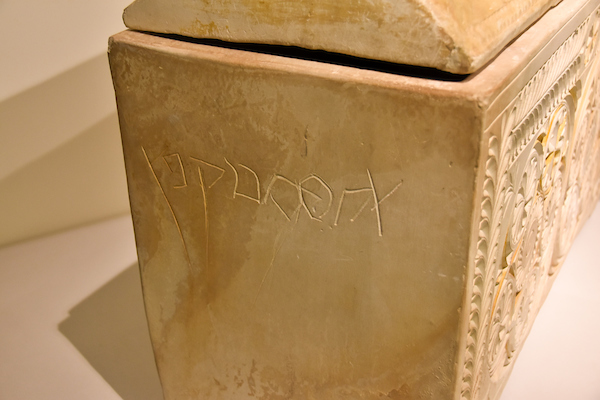
- Ossuaries: Small (about 2–3 feet long), often decorated with geometric patterns (rosettes, zigzags), sometimes inscribed with names in Hebrew/Aramaic (e.g., “Yosef bar Qayafa” for the Kohen Gadol Caiaphas).
Notable finds:
- Mount of Olives, dozens of ossuaries)
- Sanhedriya tombs
- Akeldama area
- Caiaphas Tomb in Talpiot, Jerusalem
- Beit Shearim Necropolis
- and many in the Kidron Valley vicinity.
These videos give good overviews:
Join me a I give a personal walkthrough of the family tomb of
Rabbi Judah the Prince, redactor of the mishna at Beit Shearim.
Join me as I discover a family tomb at Beit Zayit outside Jerusalem.
A shorter clip of a Second Temple-period tomb with ossuaries in situ.
Here are some photos of ossuaries:




1 Comment
Greg Garland · February 5, 2026 at 11:25 pm
My wife and I have been to Israel many times with an Hebraic scholar as well, and seen many Jewish burial places of the 1st and second century periods, including this one, including Yeshuas burial caves at the Church of the Holy Sepecule and the Garden Tomb in Jerusalem.